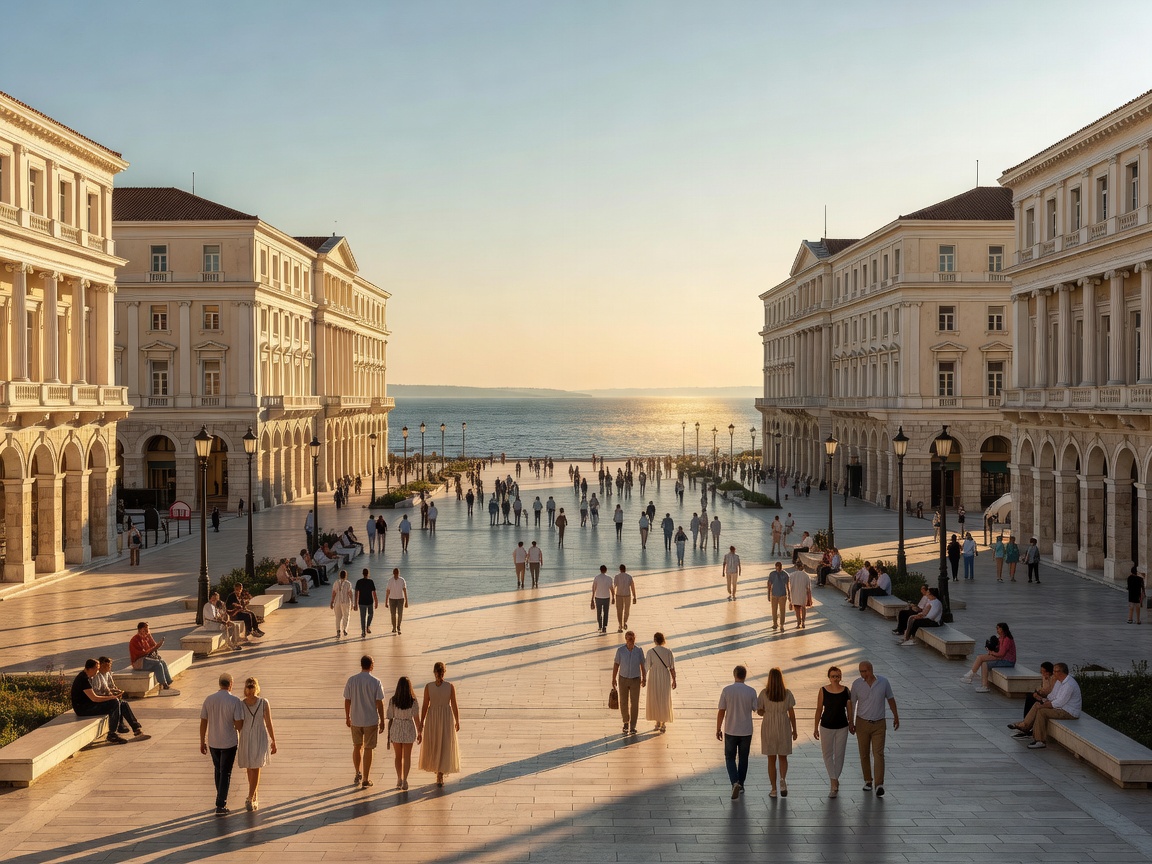
The Rhythm of Public Space
Thessaloniki’s civic identity has always been forged in its open plazas and merchant alleys. Following the 1917 fire, French urban planner Ernest Hébrard designed a monumental monumental axis linking the Roman past to the modern waterfront, culminating in Aristotelous Square. Today, navigating these bustling public corridors offers a sensory immersion into local life that requires zero financial expenditure.
Open Public Squares to Explore
1. Aristotelous Square
Functioning as the civic anchor of the city, Aristotelous Square opens like a massive amphitheater onto the Gulf. Lined by neoclassical arcades, arched porticoes, and hotels with elaborate facades, the square is entirely pedestrianized. You can walk the entire marble-paved axis from Egnatia Street down to the sea wall. Take in street buskers, public rallies, community gatherings, or simply sit on public benches to watch the maritime traffic glide across the bay.
2. Navarinou Square & The Palace Remains
Situated toward the eastern edge of downtown, Navarinou Square is a lively pedestrian concourse popular with students from the nearby Aristotle University. In the middle of the square lie the exposed, open-air sunken excavations of the 4th-century Palace of Galerius. Pedestrians walk around the illuminated perimeter of the ancient courtyard walls. The surrounding square is filled with bookshops, creperies, and shaded outdoor seating.
Walking the Historic Markets for Free
The city's historic central markets provide an intoxicating blast of sights, sounds, and scents:
- Kapani (Vlali Market): The oldest traditional open-air market in Thessaloniki. Covered by rustic corrugated roofs, the narrow corridors are organized by trade: rows of fresh fish glistening on beds of crushed ice, hanging spices and mountain tea bundles, cured olives in wooden vats, and fresh seasonal produce. Walking through and soaking up the vendors' vocal sales pitches is completely free and welcome.
- Modiano Market: Recently renovated with a striking glass roof and modern wooden stall layout, the historic food hall provides an interesting architectural contrast between original early 20th-century design and contemporary culinary preservation. Browsing the aisles is completely open to the public.
- Bezesteni Market: A 15th-century Ottoman covered market building characterized by six lead-covered domes. Today it houses small textile, fabric, and tailor shops. You can walk beneath the solid stone arches without payment.
Free Sightseeing vs. Optional Food Purchases
Wandering these markets and plazas costs nothing. You are under no obligation to purchase goods to enjoy the sights, sounds, and vibrant culture. However, should you wish to sample regional specialties, vendors sell fresh warm koulouri bread rings, olives, roasted chestnuts, and dried fruits for modest pocket change.